

While a brighter smile is a fantastic perk, the true value of a professional teeth cleaning lies in its profound impact on your overall health and well-being. The mouth is the gateway to the rest of the body, and maintaining its health is a critical component of your systemic health.
Professional dental cleanings are preventative medical procedures designed to halt disease before it starts, manage existing conditions, and protect your longevity.
If you have been putting off your regular dental visits because your teeth “look fine,” it is time to look beneath the surface.
Here are 5 essential reasons professional teeth cleaning matters far beyond just achieving a whiter smile.
1. It Is the Frontline Defence Against Cavity Formation
To understand why professional cleanings are necessary, you first have to understand the relentless battle happening inside your mouth every single day. Your mouth is home to billions of bacteria. When you eat, especially foods rich in carbohydrates and sugars, these bacteria feed on the debris left behind. As they process these sugars, they produce acidic byproducts.
How Plaque Becomes Tartar
This acid, combined with saliva, food particles, and bacteria, forms a sticky, colourless film called plaque that coats your teeth. If you brush and floss meticulously, you can disrupt and remove most of this plaque.
However, no matter how diligent your home routine is, it is nearly impossible to reach every microscopic nook, cranny, and groove of your teeth.
When plaque is left undisturbed for just 24 to 72 hours, minerals from your saliva begin to calcify it. It hardens into a substance known as calculus, or tartar. Once tartar forms, you cannot brush or floss it away. It acts as a porous shield, protecting the acid-producing bacteria underneath it while they continuously attack your tooth enamel.
Professional Intervention of Tartar
This relentless acid attack leaches vital minerals from your enamel, causing demineralization that eventually collapses into a cavity. During a professional cleaning, a dental hygienist uses specialized, sterilized tools to scale away this hardened tartar.
By meticulously removing the calculus that your toothbrush cannot budge, the hygienist effectively neutralizes the localized acid attacks, preventing cavities from forming or stopping early-stage decay from progressing into a serious issue requiring a root canal.
2. It Prevents and Reverses Gum Disease
Gum disease, or periodontal disease, is often called a “silent disease” because it is typically painless in its early stages. Many patients are entirely unaware they have it until significant, sometimes irreversible, damage has occurred.
Gingivitis: The Warning Sign
The earliest stage of gum disease is gingivitis. It occurs when the bacteria in plaque and tartar irritate the gingiva (the gum tissue surrounding the base of your teeth). You might notice that your gums are slightly red, swollen, or prone to bleeding when you brush or floss.
At this stage, the condition is entirely reversible. A thorough professional cleaning to remove the irritating tartar, coupled with improved home care, will typically allow the gums to heal completely.
Periodontitis: The Point of No Return
If left untreated, gingivitis advances into periodontitis. The inflammation moves deeper, causing the gums to pull away from the teeth and form pockets.
These pockets become deeply infected spaces where anaerobic bacteria thrive, aggressively destroying the gum tissue and the underlying alveolar bone that holds your teeth securely in your jaw.
Once bone loss occurs, it cannot naturally grow back. Periodontitis is the leading cause of tooth loss in adults. Professional cleanings, particularly deep cleanings (scaling and root planing), are the only way to clean out these deep periodontal pockets, smooth the root surfaces to prevent further bacterial adherence, and halt the progression of the disease.
Regular maintenance cleanings are your insurance policy against premature tooth loss.
3. It Provides Early Detection of Hidden Dental Issues
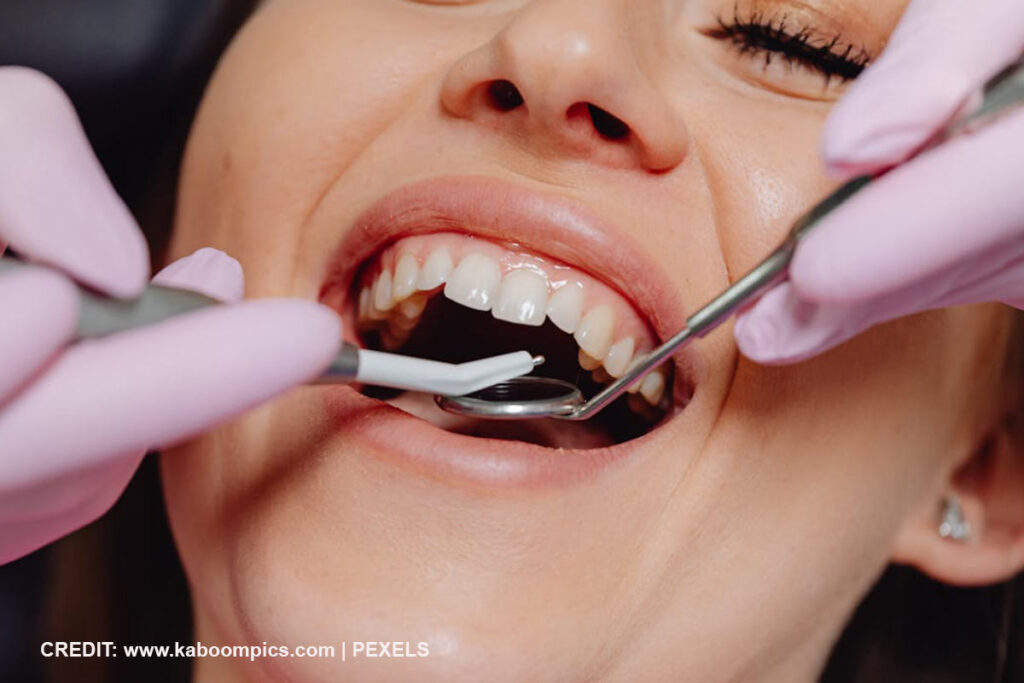
A professional cleaning appointment is rarely just a cleaning; it is a comprehensive diagnostic evaluation of your entire oral cavity. When you sit in the dental chair, you have a trained professional closely examining tissues that you cannot easily see yourself.
Cleaning Isn’t Just Polish
While the hygienist is scaling and polishing, they are also charting the health of your gums, measuring the depth of periodontal pockets, and looking for signs of trouble. Furthermore, the dentist will perform a clinical examination. This allows for the early detection of issues such as:
- Micro-fractures and cracks: Tiny structural weaknesses in the teeth that could lead to catastrophic breakage if subjected to the pressure of chewing.
- Failing restorations: Old fillings, crowns, or bridges degrade over time. Detecting a leaking margin around an old filling allows the dentist to replace it before decay reaches the nerve.
- Oral cancer screenings: This is perhaps the most life-saving aspect of a routine visit. Dentists are trained to look for abnormalities, lesions, and lumps in the soft tissues of your mouth, throat, and tongue. Oral cancer is highly treatable when caught early, but devastating if left to progress.
Catching these issues early usually means simpler, less invasive, and much more affordable treatments. What could be solved with a simple filling today might require a costly crown or extraction if ignored for another year.
4. It Protects Your Systemic Health
The traditional separation between “dental health” and “medical health” is a dangerous misconception. The reality is that the mouth is tightly connected to the rest of the body, and chronic inflammation in your gums has systemic consequences.
Inflammation
When you have severe gum disease, your gums are essentially a large, open wound. Every time you chew or brush, the aggressive bacteria thriving in your periodontal pockets are pushed directly into your bloodstream. Once in the bloodstream, these bacteria and the inflammatory markers they trigger travel throughout your body.
Extensive medical research has established strong links between poor oral health and several severe systemic conditions:
- Cardiovascular disease: The inflammation caused by periodontal disease is believed to increase the risk of heart disease. Bacteria from the mouth can attach to fats in the heart’s blood vessels, causing clot formation and a higher risk of heart attacks and strokes.
- Diabetes: There is a bidirectional relationship between diabetes and gum disease. People with diabetes are more susceptible to periodontal disease, but conversely, severe gum disease can cause a spike in blood sugar levels. This makes diabetes significantly harder to control.
- Respiratory infections: Bacteria inhaled from the mouth can travel to the lungs, potentially causing pneumonia or exacerbating conditions like COPD.
- Pregnancy complications: Pregnant women with severe periodontitis are at a notably higher risk for premature birth and delivering low-birth-weight babies due to the systemic inflammatory response.
By keeping your mouth free of chronic infection and heavy bacterial loads through regular cleanings, you are actively reducing the inflammatory burden on your entire body.
5. It Combats Persistent Halitosis (Bad Breath)
We all experience morning breath, which is easily remedied with a quick brushing and a glass of water. However, chronic bad breath—known as halitosis—is a different issue entirely and can be a source of intense social anxiety and embarrassment.
If you find yourself constantly reaching for mints, chewing gum, or using harsh mouthwashes to mask an unpleasant odour, the root cause is likely not what you ate for lunch. Chronic halitosis is most commonly caused by the proliferation of specific types of bacteria in your mouth.
Eliminating the Source of the Odour
These bacteria hide in the hard-to-reach areas of your mouth: deep within the rough surfaces of your tongue, between tight tooth contacts, and, most notably, within the tartar buildup and periodontal pockets we discussed earlier.
These bacteria break down proteins from leftover food and dead cells, and in the process release volatile sulphur compounds. This is what causes the foul smell.
Mints and mouthwashes only offer a temporary cover-up – they do not remove the bacteria or the tartar fortresses protecting them. A professional cleaning physically removes the calculus and flushes out the bacterial reservoirs that cause these malodorous compounds.
By eliminating the source of the infection and the decaying debris trapped beneath the gum line, a professional cleaning restores a genuinely fresh, clean environment in your mouth that no commercial breath spray can replicate.

Don’t Let Poor Habits Undermine Your Health
Professional cleanings are the cornerstone of a healthy mouth, but they must be supported by excellent at-home care. A brilliant cleaning will not protect you if your daily habits are actively working against your oral health.
Many patients unknowingly sabotage their dental hygiene through improper techniques. To ensure your teeth remain healthy between visits, it is crucial to avoid common teeth cleaning mistakes, such as brushing too aggressively (which damages enamel and causes gum recession), ignoring your tongue, or treating flossing as an optional chore rather than a daily necessity.
By combining impeccable daily habits with regular professional interventions, you create a comprehensive defence system that protects your smile, your bite, and your overall vitality.
Take Control of Your Oral Health Today
If it has been more than six months since your last dental visit, or if you are experiencing any signs of gum sensitivity, it is time to prioritize your health. Do not wait for pain to be your motivator.
Schedule your next comprehensive exam and professional cleaning at our dental clinic in Brampton. Our compassionate, highly skilled team is dedicated to providing thorough, comfortable care tailored to your specific health needs.
Call Springdale Dental Centre today at (905) 458-1212 to book your appointment and take the first step toward a healthier mouth and a healthier you.